
by Connor Parks
20 Years Later, the Echoes of Comair Flight 5191 Linger at Centre and Across Central Kentucky As the world wrestles to properly describe the depth of the fallout of September 11th, on this most notable yet of anniversaries, might I also bring your attention to another tragic, much more local loss. This tragedy begins far from the debris-filled streets of Lower Manhattan, rather amongst horse pastures and near lanes of traffic on Versailles Road. It involves folks much like those we know: students, small business owners, newlyweds, and folks just trying to catch a quick hop to work for the week. They are ordinary, sleepy people on a Sunday morning, almost all of them Kentuckians. All of them, however, deserve the honour and reverence I hope to bring them by raising awareness of one of the worst tragedies in Kentucky history.
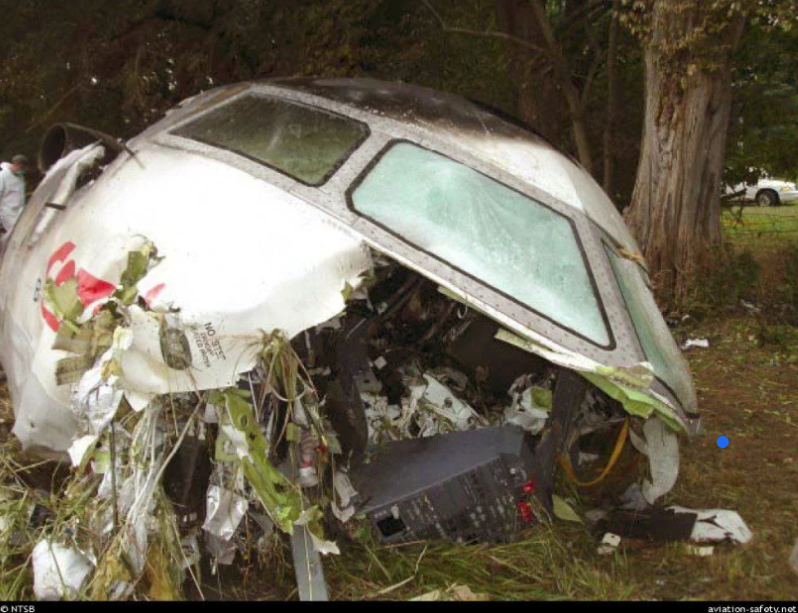
At 6:06 A.M. and 36 seconds on August 27, 2006, Comair (Delta Connection) Flight 5191 slammed into the ground shortly off the end of Runway 26 at Lexington’s Blue Grass Airport. To explain the crash in its entirety would require space I don’t have here, but the abridged version is that Captain Jeffrey Clay, expecting an easy morning hop to Atlanta, accidentally lined up on the wrong runway- the shorter of Lexington’s two at the time- and flew the 50-passenger jet off the end at over 160 miles per hour, into rolling fields and groves of trees. The commuter jet clipped a fence and trees before smashing into the ground and breaking up in a fiery explosion that claimed the lives of 49 of the 50 on board. Copilot (First Officer) James Polehinke, who had assumed control of flying the aircraft from Captain Clay after lining up, was seriously injured, and the only survivor. For as long as I’ve known about this crash, I’ve found countless unexpected little ties to how its passengers and long-term impact have affected the central Kentucky we now inhabit. Ever been to Finley’s Fun Center in London or Somerset as a kid? Its founder and owner, Mike Finley, was among the fallen. Multiple deans and faculty of both UK and EKU were on board with members of their families, leaving still-active educational legacies in their absence. Pat Smith, a board member of Habitat for Humanity International on his way to a project in Mississippi, is remembered through a sizable endowment for the Lexington-area H4H that continues changing lives to this day. Yet for our purposes, the most noteworthy soul on board that day may very well be Scarlett Parsley Hooker, Centre Class of 2004. Scarlett’s story is without a doubt one of the most heartbreaking I’ve heard: she and her husband Jon Hooker, a former UK baseball player, had gotten married just 12 hours before at a museum in Lexington, and were headed to Atlanta to catch another flight to their honeymoon at Disneyland. Dr. Lori Hartmann, who Scarlett took for a single course at Centre, described her as a “shy”, but “friendly, beautiful girl” who was evidently a devoted student. Around campus, she was a cheerleader, a proud Theta, an Anthropology/Sociology major, and someone described across the board as a light and friend to everyone she came into contact with. In writing this article I consider all the pathways around campus we share with her time here: on a morning walk from Greek Row to Young, she was a colonel just as we are now. She went on to pursue a masters in communication disorders at UK, in process at the time of the accident, yet her time at Centre clearly set the stage for what was already a vibrant, flourishing life.
Perhaps the most interesting of all these little connections, however, lies in a direct link to the Cento itself. The mother of one of our own staff writers, Rev. Rachele Holmes, was working as a chaplain in hospice care in 2006 when the accident occurred, and was called into a meeting the following Monday morning. The team was told they would be helping bereaved family members find their loved ones’ belongings. No one knew exactly what the community impact would be, but as Holmes and the other chaplains trod inch by inch through the scorched fields, a day after the plane had been removed, it became evident that the loss would send shockwaves through the city. Though she felt ill-prepared for the combination of counselling and recovery, she did find one woman’s watch. Later, after searching with a woman for her husband’s wedding ring for half an hour to no avail, she earnestly sought to help her as she collapsed to the ground in devastation. She learned that some victims, such as the daughter of one man she counselled, weren’t even supposed to be on board, but had been shuffled around in the broad system of delays and move-ups that defines regional aviation. Others, like a news reporter friend of hers and his family, had been previously booked but for some reason were shifted to a later flight, spared by something greater than we know. In her words, the crash was Lexington’s “own kind of 9/11 moment”, where everyone knew exactly where they were when the news first broke to them. There are some instances in time, she remarked, where the world changes like a lightswitch, and we’re forced to observe the fragility of every decision we make in their wake. Comair, for Lexington, was certainly one of these moments. Long after the closing memorial service at the memorial sculpture at UK’s Arboretum, where she was asked to sing Josh Groban’s “You Raise Me Up”, many family members still came for regular counsel at the office, full of perhaps the only people in whom they could find lasting solace. She says she could still pick out just about any of their faces in a crowd.
Perhaps you’re like me and have no true connection to anyone who lost their lives in this devastating accident. Yet when confronted with the weight of such a before-and-after disaster, now two full decades in the future, it’s worth every word of this article to commemorate those whose lives were taken too soon. Aside from those impacted feeling more compelled to remember the delicacy of life, the regional aviation industry (long the backbone of U.S. travel) learned many valuable safety lessons, many of which have been implemented and make each flight you take today all the more secure. For most of the passengers, it was only the first leg of a longer voyage to destinations around the world. Yet their journeys have not gone fully untravelled by the remarkable legacies each of them left behind. For the 49 lost in Lexington that cloudy Sunday before dawn, we can only ask for lasting, perpetual peace for their loved ones. May we reflect on their existence as we wake up each day, two decades on, in a Kentucky remarkably shaped by their loss.