
The Drama Column – A Column Dedicated to Beating a Dead Horse. Analyzing old scandals and celebrity boycotts, and presenting the facts to finally determine… Was the cancellation deserved?
Written by The Discordian
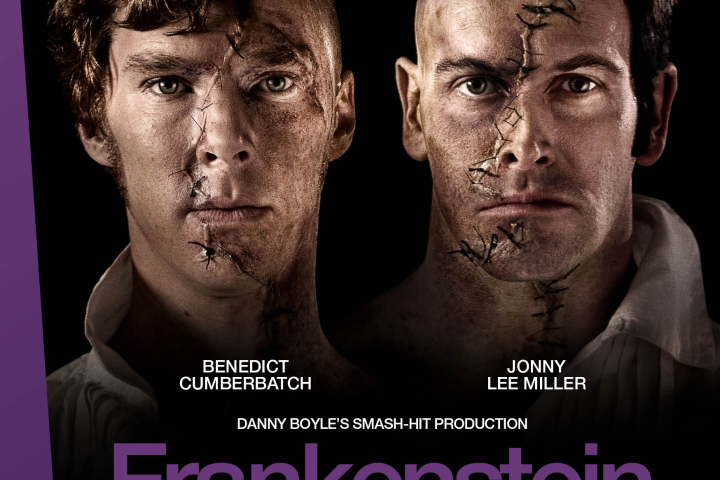
In the 2011 Royal National Theatre’s smash-hit production of Frankenstein, Benedict Cumberbatch and Johnny Lee Miller alternated roles between the Creature and Frankenstein on each performance. This innovative design and concept, directed by Danny Boyle, led to many awards and notoriety for both the actors and the production. Interviews immediately hit the screens following this production, as people were itching to hear the genius behind his masterful interpretation and performance of the Creature.
For those who haven’t seen this performance (I highly recommend it!), the production was told from the Creature’s point of view, beginning with a 20-minute scene of his birth from the mechanical womb of Frankenstein’s lab. The performance was raw, physically demanding, and uncomfortable, embodying what one could imagine to be a fully grown man’s birth. We see the Creature’s first neuron connections, his first steps, his animalistic grunting attempts at speech— everything, up close and personal.
That’s where the controversy started.
In an interview about the process behind the creation of Frankenstein, Cumberbatch said, “I went to schools and met people, some of whom are very high functioning on the autistic spectrum. I met a 17-year-old who had the mental age of a one-and-a-half-year-old. Everything was just about bodily functions– smell, sexual arousal, shitting, whatever. So when I hear people use diagnostic labels casually, it really upsets me.” He added, “[I]t upsets me that those 17-year-olds were coming to the end of their care. Because after that, they’re supposed to head into employment and earn revenue for the government. Ha. Because from early on, you’re empiricised– in the Orwellian sense.
“We went to two extraordinary schools for autistic children, and there is an element of the movement that reflects (The Creature’s) but also, as Jonny (Miller) was saying, (the story is) an evolution of a man who is fully formed– so it’s an evolution with a fully grown body…” adding “(the process) was about how to stagger that progression and having certain barriers to being fully evolved with certain autistic movements.”
Then, in a separate interview, Cumberbatch was asked whether he agrees with the cultural ‘head-canon’ that Sherlock and Alan Turing (other characters he has played on screen) are autistic. Cumberbatch said no, and that “Sherlock is a sociopathic show-off and Alan was anything but that (autistic),” adding that “I don’t think he (Turing) was on the spectrum, I think a lot of people are very lazy with that.” He suggested it was “really dangerous” to consider these characters as autistic.
He said he understood how it could be good for the community, but added, “I don’t go into a job saying, ‘is this autism? Is this Asperger’s? Is this some other form of slight learning difficulty or disability? I’m very wary of that, because I’ve met people with those conditions. It’s a real struggle all the time.”
So, as you can probably imagine, this blew up into controversy overnight. Blog posts and articles went flying about how these statements were ableist and insensitive, and as a neurodivergent person myself, I agree. However, I do understand why he might have decided to study autistic people for this role, and I want to explain his meaning to the best of my ability, since he did not:
The Creature is born a fully grown man, cobbled together from other people’s bodies, and one can imagine that multiple nervous systems having to organize simplistic movement could be incredibly difficult. Autism is often comorbid with movement difficulties, and some autistic people even describe coordination and motor control as if their body is ‘fighting’ their brain. I imagine Cumberbatch would have thought of all these aspects and more, and decided to study and interview people with ASD to better understand how the Creature could be interpreted.
His comment “everything was just about bodily functions– smell, sexual arousal, shitting, whatever” sounds absolutely absurd, but when followed with “it upsets me that those 17-year-olds were coming to the end of their care… they’re supposed to head into employment and earn revenue for the government,” it shows that he was at least attempting to comment on the lack of support people with disabilities have to flourish, especially in the school environment he observed.
In a real-world context, autistic (and other mental/physical disorders) people often describe movement as their body is fighting itself, as if their brain and body can’t communicate as easily as neurotypical people can. To fully understand that sentiment and how it might inform the performance of a character whose body literally can’t communicate with itself as naturally as others can, it makes sense that Cumberbatch would want to study the movement of people with ASD and movement disorders to research ways the Creature could move on stage.
As for the topic of Sherlock and Turing’s autism, I believe Cumberbatch is attempting to comment on the term savant. A savant is a term for an informal subset of autism that displays extraordinary, ‘genius’ talent. The term is often considered to be outdated, but still exists in media in stereotypes such as Sheldon Cooper from Big Bang Theory. Though Cumberbatch did not use this term, his comment of assuming characters to be autistic being ‘dangerous’ makes a lot more sense if he was thinking of the specific term savant. That is, stereotypical savant characters (such as Sheldon or Sherlock) are harmful when applied to the entire autistic community. Neurotypical people consume this content and then enforce this stereotype onto neurodivergent individuals, rejecting anyone who doesn’t check the right ‘boxes of specialness’. “So, when I hear people use diagnostic labels casually, it really upsets me.” Cumberbatch’s comment makes a lot more sense in this context, because then it is indeed true that it is dangerous to push ASD labels onto characters like Sherlock and Turing. The people he observed in mental health centers live much more difficult and oppressed lives than savant stereotypes in media, and it seems like it upsets him to carelessly head-canon without recognizing the difficulty of the disorder in real life.
A lot of neurodivergent and neurotypical people have found his comments from these two interviews to be incredibly ableist and harmful, and I entirely agree that he did not give proper context, and used harmful language. I believe these comments were made to advocate for the people he observed in his time researching at the school. In reality, though, his comments backfired entirely and caused hurt and further division.
But that’s just my two cents. What do you think?