
by Jamie Krapf
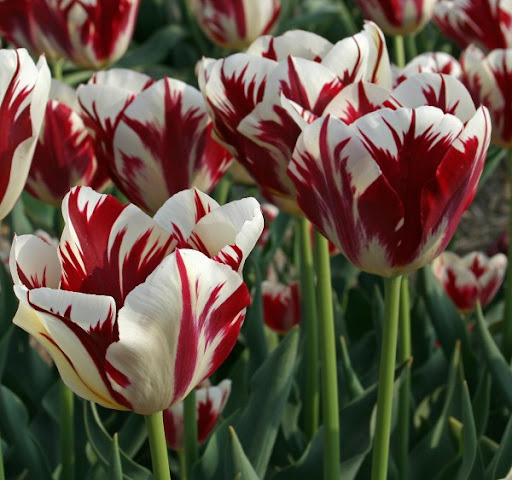
If you think poor economic investments only started with NFT’s, crypto currency, and sub-prime mortgage loans, I want to take you back to a time before the internet. Travel back to 1634, when the Dutch mostly ruled the worldwide economy. The Dutch did something only the most powerful civilizations do once they have power—invest in something that makes absolutely no sense: tulips. And more specifically, the Viceroy Tulip (image shown above). The Dutch decided that these were the greatest things since the invention of money itself. During the craze between 1634-1637, these multicolored tulips sold for 14x the annual salary of a skilled artisan. To put it in modern terms, a singular viceroy tulip could cost as much as $840,000. What’s even crazier is that this look of tulip is not a natural coloration, and is a result of a virus. This virus ends up harming the tulip’s ability to reproduce, and its ability to survive harsher weather conditions, with the side effect of it looking cool. So you’re effectively paying about a million dollars to get a tulip that dies in a few days and can’t reproduce. (If you’re curious and want to learn more, I recommend looking at any Investopedia article, any university study, or even the Amsterdam Tulip Museum are great resources.)
This tulip craze was incredibly strange, since these tulips had no cultural significance or basis to even cost this much. This was simply a luxury item. Having something outrageously expensive for the upper class is nothing new, but what was new was people’s willingness to “invest” in these tulips. They were in such high demand, that if you wanted to sell a tulip, it would make its money back tenfold. So, if there was something that could make 10x the amount of money that you put into it, why wouldn’t you invest in tulip seeds? Or even buy and resell tulips? There was seemingly always a higher and higher demand for tulips. This philosophy of greed and foolishness continued all the way up to 1637 until one singular viceroy tulip was sold for:
- 3 tons of wheat
- 5 tons of rye
- 4 oxen
- 8 pigs
- 12 sheep
- 2 hogshead barrels of wine
- four tons of beer
- two tons of butter
- half a ton of cheese
- a full bed, a full suit and pants
- A silver drinking cup.
This exchange served as a rude awakening. People started to look around and say to themselves, “what are we even doing?” The price of tulips crashed by about 99.9%, back down to a reasonable threshold. This phenomenon of extreme greed mixed with an inflation of assets’ actual worth by 1000x has played out in modern times more times than I can count. Irrational investments are not a new thing, and in fact this was the first documented instance of a speculative bubble.
If you’re looking around recently, and feeling that poor financial investments are a new thing—from NFT’s, to crypto, to the newest fad—remember that we as people have always been irrational with our money, and what we choose to put it into. If you’re ever in a tough situation, or down on your finances, and someone proposes to you a “low risk high reward” investment… think to yourself: “are they trying to sell me a tulip?”