
by Leigh Wingfeld
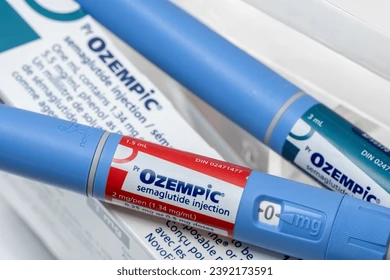
Within the past year or so, I’ve noticed that GLP-1’s, such as Ozempic and Wegovy have become more prevalent in mainstream media. You can’t look at social media, streaming or live TV without seeing advertisements for GLP-1’s or GLP “friendly” products. GLP-1’s are an incredible scientific discovery used to treat obesity and type 2 diabetes, but I worry about the commodification of these life-saving medicines. From what I’ve observed, the rise of GLP-1’s has led to the return of early 2000’s-esque diet culture, which is concerning not only for individual health, but broader cultural implications.
According to the CDC, roughly 40% of adults in the U.S. are considered obese. There are many barriers people face in receiving medical treatment for obesity, such as lack of access to a healthy lifestyle and societal stigma. GLP-1’s are one of, if not the most, effective non-lifestyle-focused treatments for obesity. The medications referred to as GLP-1’s are agonists that mimic the natural GLP-1 chemical produced by the small intestine. They block the GLP-1 receptors, extending the lifetime of GLP-1 hormone in the bloodstream. This is important because of the role that GLP-1 chemical plays in the release of insulin and glucagon. The GLP-1 chemical signals to the pancreas to release insulin; this also prevents more glucose from entering the blood stream. In turn, stomach emptying slows, and one will feel more full after eating, as the chemicals in the body are signalling fullness. GLP-1’s are an extremely effective medication, which is incredible for many people’s health. The concerns I have are with the culture surrounding weight loss, and how these medications will be misused.
I grew up surrounded by diet culture. Almost every dinner conversation surrounded weight, calories and exercise. Daily life became centered around thinness. Shows like The Biggest Loser and Supersize vs Superskinny were normalized and even praised in some circumstances. People who were plus-sized were dehumanized and treated as lesser than in my daily life, and that was the expectation. It took me a long time to escape this plague of a thought process. This mindset taught me and others to measure my own value through the number on the scale. In this culture, thinness is synonymous with purity, discipline, and living the “right” way. Companies know the prevalence of this culture, especially in the U.S., and they have exploited this for decades. In the 80’s, you had at home workout videos; the 90’s, you had AIDS-era gym culture and heroin chic; by the 00’s you had the rise of fat-free foods and fad diets. In the 2010’s, there was a shift to a body positivity movement in many ways, but the 2020’s have regressed.
GLP-1’s and GLP-1 “friendly” foods are the current weight loss fad. Under adequate medical superversion, GLP-1’s are a great tool for weight loss, but not in the way they’re being marketed right now. GLP-1’s are being marketed as a miracle weight loss drug. This isn’t entirely wrong, but it fails to take into account what happens when the patient reaches their goal weight. If someone no longer needs to lose weight and chooses to go off of GLP-1’s, those hunger signals return, and no real habit change has been made. The weight comes back, and the cycle starts back over again. The way GLP-1’s are being marketed and used creates a system to keep patients in a constant cycle of weight gain and loss. This creates a massive toll on the body, constantly being in this yo-yo cycle of weight. Given the way our society glorifies thinness, this cycle can have a massive mental toll on the patient as well: they feel confident in the weight loss, lose that confidence when they get off the medication, then go back to the medication chasing the emotional safe space of thinness.
Furthermore, the marketing of GLP-1 “friendly” and high-protein products is ridiculous. Many of these products aren’t all that different from the original product, nor are they accurate to their labeling at all. For example, Jamba Juice has a GLP-1 friendly menu that has the same nutrition label as the regular version of the product. In grocery stores, there are now protein poptarts that have 380 calories, 10g of protein, and 30 grams of sugar—for two pastries. There is no designated standard for this labeling of a product. The meaning of GLP-1 “friendly” and “high” protein are arbitrary.
By no means am I discouraging anyone from seeking out medical treatment to improve their health, but I want people to be educated on some of the harsh realities often not talked about with GLP-1 medications. Speak with a qualified healthcare professional about options and goals before seeking GLP-1 medications. Staying aware of the deceptive marketing tactics of some companies is another issue to be aware of, even if you aren’t on the GLP-1 bandwagon. The good health and safety of one community member benefits the entire community, staying educated of risks and benefits of potential choices is essential to our communities health.