
by Adam West
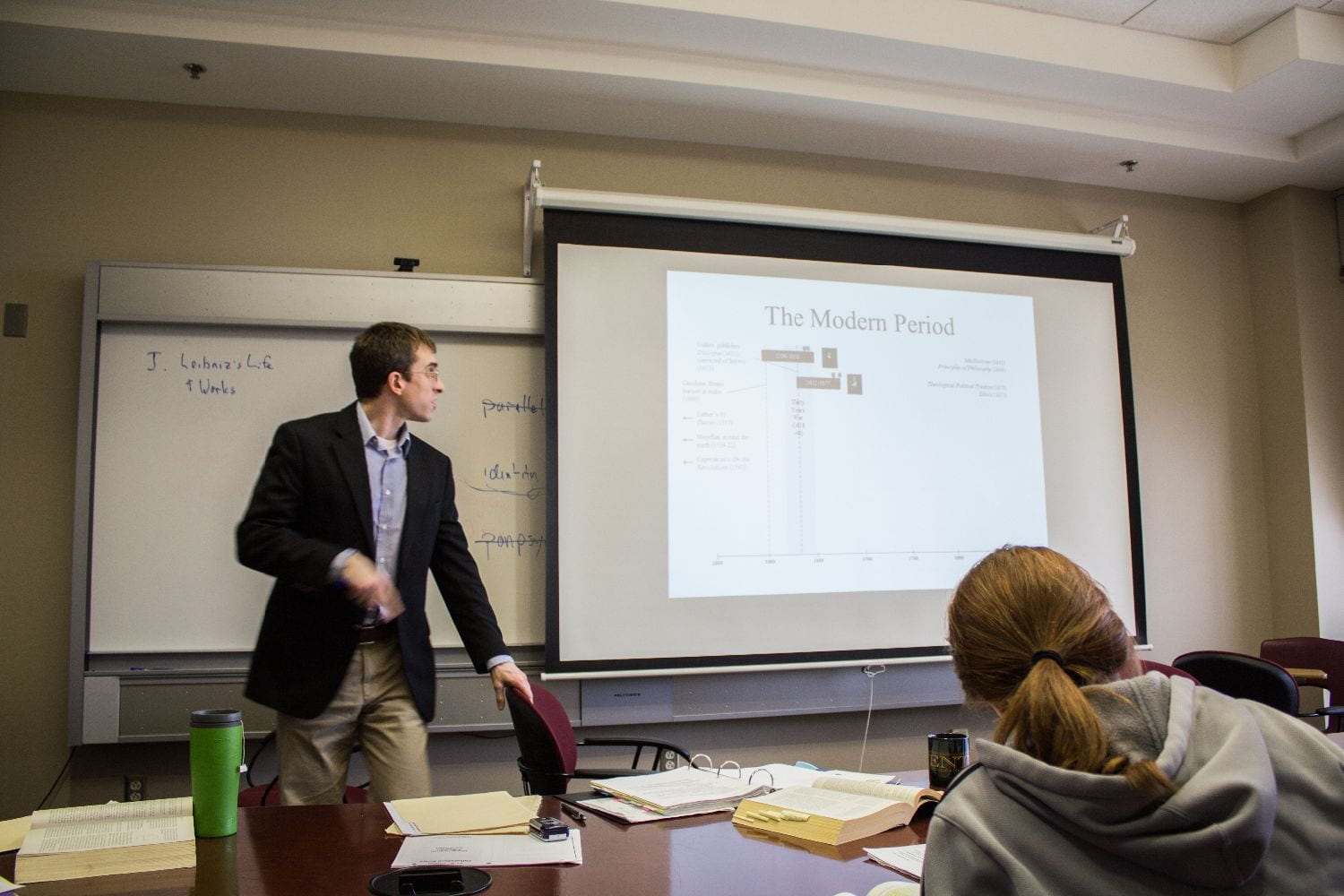
Classrooms aren’t something that people usually think about, especially how classrooms are assigned for different classes each semester. However, we here at the Cento are curious about how things happen behind the scenes. The Cento reached out to Jacob Johnson, Centre College’s registrar, to learn about the processes behind how classrooms are decided.
It is ultimately the registrar’s job to determine the classrooms, however, there are a lot of steps to this process that the students don’t get to see, and a lot of steps before the registrar has to get involved and assign classrooms. First, the program chairs for each department submit a list of classes that they plan on offering in the next term, and attempt to spread their course offerings across different time slots. When they submit that information to the registrar, they typically include classroom needs and preferences for each course. Classrooms that are requested the most are Young 101, 102, 110, 111, and 112 and Crounse 301, 302, 307, while registrar Jacob Johnson notes that “Sutcliffe 330 is not very popular,” although he has “recently identified a few professors that enjoy teaching there and that has alleviated some pressure.”
The factors that the registrar has to take into account in terms of when classes will be are typically thought of in this order, as outlined by Mr. Johnson:
“What must this classroom have for this course to be taught? (Periodic Table, Gas hook up, projector, etc.)
- How many students are expected to enroll in the course? Is there a course cap lower than 30 for this course? (We have a limited number of classrooms that can accommodate 30 students)
- Is this same professor teaching another class back-to-back?
- Which classroom, if any, has the professor specifically requested?
- Has the professor requested any specific preferences?”
However, by the time that the registrar has to assign classrooms, most of them have been assigned through the process of elimination by classroom needs, seating availability, and their location. Certain departments have the first claim on certain rooms before the registrar is permitted to assign rooms to different department. Once the registrar gets through the scheduling materials for classroom assignments, roughly 75% of the scheduling is over based on the process of elimination and necessity. For the courses that are left, the registrar rotates what divisions get first pick each semester, and plugs the remaining courses into what is left across campus. Even though it might seem like seniority would matter, the decision making process usually doesn’t need it to come down to the seniority of the professor and professors even try to help each other out in terms of room assignments.
Some classes end up getting cancelled or times get changed at the last minute, meaning that the schedule could be messed up due to that. As well, course enrollment might end up being much more or less than expected, forcing re-arrangement of the schedule.