
by Duffy Oakley
When Bob Brockman transferred from Centre after two years, no one could have predicted the whirlwind that would tie Brockman back to the school decades later. This incredible saga involves Swiss bank accounts, a DOJ raid in Bermuda, the largest federal tax fraud lawsuit ever filed, and financial turmoil the Centre administration would probably like to forget ever happened.
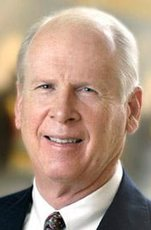
Bob Brockman was born in St. Petersburg, Florida, in 1941 to Alfred Eugene and Pearl Brockman. After graduating college, he worked for Ford and IBM before starting his own software company in 1970 which specialized in making computer systems for car dealerships. The company would grow and later merge with another software company, Reynolds and Reynolds, with Brockman at the helm as CEO. Brockman’s success with these businesses would turn him into a billionaire, and with this wealth, he began to donate millions of dollars. He was a prolific donor to many Republican politicians, especially in Texas, where he lived for most of his adult life. Despite his relatively brief stint at Centre, he also chose to donate millions of dollars to our school, financing the construction of both Pearl Hall (named after his mother and grandmother) and the A. Eugene Brockman Commons (named after his father).
If the story ended there, it would not have been particularly newsworthy. But in 2013, he made national headlines when Centre announced that Brockman had agreed to make a whopping $250 million donation to the college. At the time, this was the single-largest donation to a liberal arts college in history and rivaled some of the largest donations to the country’s most well-known and well-funded schools like Yale and Johns Hopkins University.
Just a few weeks later, however, everything fell apart. The $250 million donation was inexplicably revoked. The Centre administration, probably not wanting to offend the billionaire who had been both a loyal donor and Chair of the Board of Trustees from 2008 to 2013, stayed quiet about this shocking reversal that blindsided the campus community. The official reason Centre gave for the cancellation of the donation, which would have funded 40 annual full-ride scholarships, was an unforeseen “significant market capital event.” But, as reported by Buzzfeed News (yes, this story was crazy enough to be covered by Buzzfeed), the donation’s cancellation was the unforeseen market event. Until the surprise last-minute cancellation, the agreement, which was part of a larger multibillion dollar loan package between Deutsche Bank and Brockman’s company, seemed to investors and analysts to be a “done deal.”
So where did it all go wrong? As is frequently the case when Centre chooses secrecy over transparency, rumors ran rampant on campus. Some blamed Brockman, others blamed the administration, while still others blamed the Board of Trustees. According to Evatt Tamine, the Australian lawyer who administered Brockman’s charitable trust, the fault was with Centre’s refusal to accept Brockman’s terms for the scholarships. These included requirements that scholarship recipients be fluent in English and pass physical fitness tests, although an anonymous alumnus quoted in the Buzzfeed article claimed there were other requirements the administration found “crazy” and “extreme.” Other rumors suggested Brockman eventually wanted his name to grace not just a building and a scholarship, but even wanted the whole school renamed after him. Although that obviously never came to pass, he was named a “Life Trustee” two years after the donation fell through, as Centre hoped to stay in the good graces of this man with deep pockets.
The financial earthquake which rocked Centre from the fallout of Brockman’s deal didn’t just catch the attention of national media outlets: it also caught the attention of the IRS. The charitable trust that was supposed to make the donation to Centre was based not in the United States, but in Bermuda, an offshore tax haven. In 2018, Tamine, the Australian lawyer in charge of the trust, had his home in Bermuda raided in a joint operation between the IRS, Department of Justice, and local police. He eventually cooperated with the DOJ as a witness providing testimony against their real target: Bob Brockman.
The resulting federal tax fraud lawsuit involved over $2 billion and was the single largest case ever filed against an individual. Brockman was indicted in October 2020 by a grand jury on thirty-nine felony counts, including tax evasion, conspiracy to defraud the United States, international money laundering, and destruction of evidence. He allegedly laundered funds from his charitable trust in Bermuda through Swiss bank accounts to facilitate his personal purchase of a Colorado fishing lodge, a private jet, and a luxury yacht appropriately named Turmoil. The indictment also directly mentioned the withdrawn $250 million donation to Centre, with Brockman allegedly orchestrating the negotiations using an encrypted email system through which he sent talking points to his proxy about the donation beginning in February 2013. He later sent out a press release to his proxy about the donation in July, then in August sent detailed instructions as well as an order to “pull the plug on the project” if his demands were not met. About a week later, according to the indictment, Brockman ordered his proxy to cancel the gift and gave instructions on what to tell Centre to explain why the gift was cancelled.
Despite the detailed indictment and cooperation of key witnesses, Brockman ultimately never stood trial. Probably as a delay tactic, Brockman claimed he was unable to stand trial because he was suffering from dementia–although state-appointed medical examiners determined otherwise, and federal prosecutors alleged he was faking it to avoid being tried for his crimes. Although a judge eventually ruled that he was competent to stand trial, scheduled for February 2023, Brockman never faced a jury as he ended up passing away in August 2022. At the end of last year, his estate finally settled the lawsuit by agreeing to pay $750 million in back taxes and fines to the IRS.
So why is this story worth bringing up now? While the wild course of events involving Brockman and Centre has seemingly drawn to a close, and while most of the people involved are no longer in the picture (most of the Centre administrators directly involved with the $250 million negotiations in 2013 have since retired or left the school), many of the underlying issues remain relevant not only to Centre but to the country. Department of Education statistics show that Centre, like many colleges, continues to depend on high-dollar donations and large investments in its endowment because tuition alone is insufficient to cover the costs of its day-to-day functioning, and the college is even more dependent on wealthy donors for long-term capital investments. A lack of transparency, particularly with regard to Centre’s fiscal situation and financial decisions which have led the school to repeatedly increase tuition, continues to plague the school. At institutions of higher education across the country, big donors don’t just get their names put on buildings, they increasingly call the shots, just as they do in the political arena. Billionaires have extraordinarily outsized influence in our society, and use their wealth to influence policy decisions at all levels. In remembering the story of Bob Brockman, we must continue to carefully interrogate the role that the ultrarich have in writing the rules of the game not just at Centre but throughout the world.